Standing Your Ground - Part 2
Ministries > Unlimited Grace with Bryan Chapell
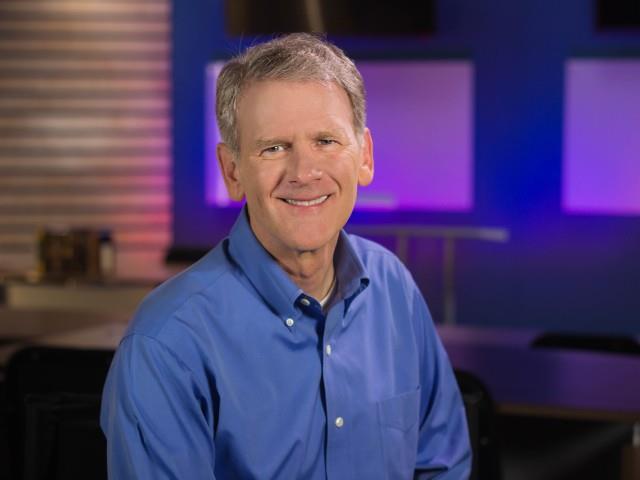
Pastor Bryan shares the second half of a lesson from Daniel 1. Dr Chapell highlights not only our need for faithfulness to God in hard times, but also the opportunity to use the Babylon’s of our lives for the advancement of God’s purposes.
Bryan Chapell: We are told to pray for the welfare of the city to which we are called. Even if it's a city that we recognize has problems or land that we recognize may be in opposition to God because the land and the city and the community is not the ultimate power. Our God is. And so we pray that God would be at work and recognize if we are on our knees in Babylon, God is making our hearts fully attuned to him.
Guest (Male): So glad you joined us for today's Unlimited Grace, the audio broadcast ministry of pastor and author Brian Chapel. In today's episode, pastor Brian shares the second half of a lesson from Daniel 1. Dr. Chapel highlights not only our need for faithfulness to God in hard times, but also the opportunity to use the Babylons of our lives for the advancement of God's purposes. You can find this lesson and many others when you visit unlimitedgrace.com. And while you're there, look for pastor Brian's book, The Multi-Generational Church Crisis. This compelling book asks the question of the church, what could be accomplished in the name of Christ if we could better understand each other? Let's hear now from Dr. Brian Chapel as he shares the second half of the lesson, Standing Your Ground.
Bryan Chapell: We begin today in Daniel chapter 1 thanks to the great number of you, double what we expected, who came on Wednesday nights as we prepared to look at a prophetic book in the Bible, one of the great prophetic books, and we talked about biblical prophecy for a while, just beginning to understand some of its parameters, sometimes how thought has developed in this country. But now we actually want to dive in to the great book of Daniel, a book that starts out talking about a people who do not perceive greatness at all. They perceive persecution, exile, and slavery. Daniel, his friends, his family, his nation is under the judgment of God for rebellion. But that is not the end of the story. God has a plan for his people, and he will reveal it here in the book of Daniel. Let me ask that you stand as we'll read a portion of Daniel chapter 1. I'll start at verse 8. Already the writer of Daniel has expressed that Daniel and his friends have been taken from the slave pits and put in the king's house to learn his ways and also to be fed his food. And we'll see their response. Verse 8. But Daniel resolved that he would not defile himself with the king's food or with the wine that he drank. Therefore he asked the chief of the eunuchs to allow him not to defile himself. And God gave Daniel favor and compassion in the sight of the chief of the eunuchs. And the chief of the eunuchs said to Daniel, I fear my lord the king who assigned your food and your drink, for why should he see that you were in worse condition than the youths who are of your own age? So you would endanger my head with the king. Then Daniel said to the steward whom the chief of the eunuchs had assigned over Daniel, Hananiah, Mishael, and Azariah, test your servants for 10 days. Let us be given vegetables to eat and water to drink. Then let our appearance and the appearance of the youths who eat the king's food be observed by you, and deal with your servants according to what you see. So we listened to them in this matter and tested them for 10 days. At the end of 10 days, it was seen that they were better in appearance and fatter in flesh than all the youths who ate the king's food. So the steward took away their food and the wine they were to drink and gave them vegetables. As for these four youths, God gave them learning and skill in all literature and wisdom. And Daniel had understanding in all visions and dreams. We'll stop there for now. Let's pray together. Father, thank you for faithful young people who become models for the ages of what it meant to trust your hand in a hard place. In that, not only is Daniel the hero, but our great God is the hero who provided for those who so desperately needed his help, came to the rescue, preserved them, and blessed them that they might be a blessing. Teach us what it means to be at home in Babylon, but in your hands at the same time. This we ask in Jesus' name. Amen. Please be seated. I want to take you to a portion of scripture that you may not have been to before that relates particularly to this account in Daniel of the people of God in Babylon. It's Jeremiah chapter 24. Jeremiah chapter 24 and the Lord has put before Jeremiah an image of a fig basket with good and bad figs with an amazing message there. Jeremiah chapter 24 and verse 4. Jeremiah 24 and verse 4. Then the word of the Lord came to me, says Jeremiah, thus says the Lord, the God of Israel, like these good figs, so I will regard as good the exiles from Judah whom I have sent away from this place to the land of the Chaldeans. I will set my eyes on them for good. I will bring them back to this land. I will build them up and not tear them down. I will plant them and not uproot them. I will give them a heart to know that I am the Lord, and they shall be my people, and I will be their God, for they shall return to me with their whole heart. But thus says the Lord, like the bad figs that are so bad they cannot be eaten, so I will treat Zedekiah, the king of Judah, his officials, the remnant of Jerusalem who remain in this land and those who dwell in the land of Egypt. Here's an amazing thought. God is even as his hand of discipline upon his people in Babylon saying, now now you need to know something if you are in Babylon at this moment. The place of God's blessing is not in hiding in Israel. The place of blessing is not fleeing to Egypt. The place of blessing is actually in Babylon where under the discipline, under the oppression, my people begin to live for me because as a consequence of their living for me in this land of oppression and pressure and temptation, as they live for me, they are actually developing a whole heart for the Lord. It's not it not running into our holy huddles. It's not just fleeing to the desert somewhere. He is saying, I expect you not to waste your Babylon. If that's where you have been called, use it for God's purposes. How do we do that? How do we maintain our faithfulness in the land of Babylon even if we are in an American Babylon? The first answer is back there in Jeremiah. As Jeremiah speaks to those people who will be blessed in Babylon, he says in Jeremiah 29 in verse 7, seek the welfare of the city where I have sent you and pray to the Lord on its behalf, for in its welfare you will find your welfare. We do something in this church that may surprise you at times. Even as much as we may object at times to governmental policy, to government officials' particular stance, to to what judge rulings there may be, we get down on our knees and we pray for those in authority over us. We pray for Peoria. We pray for the school system. We pray that young people would be able to hear the gospel through those of you who minister boldly and wonderfully within our schools in the local community. Why do we do that? Because we are told to pray for the welfare of the city to which we are called. Even if it's a city that we recognize has problems or a land that we recognize may be in opposition to God because the land and the city and the community is not the ultimate power. Our God is. And so we pray that God would be at work and recognize if we are on our knees in Babylon, God is making our hearts fully attuned to him. And when our hearts are wholly after him, we are actually accomplishing what God intends for that moment. And what I began to recognize in you, if I go with my Savior into Babylon, my own heart becomes melded, welded, set on him. And that is his very purpose at times for us to be faithful in Babylon so that we would have gospel dependence on the God who is our hope and believe and see he is more powerful than anything in the world because we are seeking him and seeing his hand. Even at the same time as we are praying, what else is he calling us to do? We maintain our purity as well as our prayers. Not a mystery to you? Daniel and his friends resolved not to defile themselves by eating the king's food. Now what was wrong with the food? Too many calories? No. Probably not the reason. Possibly been sacrificed to idols. And so recognizing Levitical law, Daniel and his friends did not want to eat the meat sacrificed to idols, but it never says that. It may have been that Daniel and his friends who are so smart recognized the path of assimilation. We will get dependent on this nice food, on the pleasures of Babylon. It may simply be that Daniel says, wait a second, my people are mainly working in the slave pits. What right have I to be eating the king's food while my people are under such oppression? The reality is though we don't know why Daniel did not eat the food. We're pretty sure it's not because his mother said vegetables are good for you. Something else is going on. He believed he would defile himself for the eating of the food. And what we are being taught is that principle of the gospel that is repeated in the book of James, for him that knows to do good and does it not, to him it is evil. Sometimes what we do as believers is we we look at the the sin or the practices or the habits of our peers and we say it it doesn't seem to bother them and and and so I guess it's okay for me. But what the Bible is calling us to do is say, no, for you, if you know it's not right for you, then do not indulge it. For him that knows to do good and does it not, to him it is evil. For Daniel and his friends, they made a commitment to purity. We will stand for the things of the Lord, and that in itself is intended to be a powerful instrument in the hand of God. Pray and live a life of pure commitment to God.
Guest (Male): You're listening to Unlimited Grace, the audio broadcast ministry of pastor and author Brian Chapel. It may seem hard for younger Christians to believe, but people over 50 were raised during an era when 90% of Americans identified as Christian. These older believers were once part of a majority group that understood the mission of the church was to take control of our culture, to halt its evils. At the same time, Christians under 50 have lived their entire lives perceiving themselves as a minority that needs to make credible their faith to a secular pluralistic culture. These distinct experiences and perceptions have a profound impact on the priorities different generations have for church ministry. It's no wonder that younger and older believers don't always see eye to eye. In his new book, The Multi-Generational Church Crisis, Dr. Brian Chapel asks the question, what could be accomplished in the name of Christ if we could better understand each other? This practical and hopeful book is backed by thorough research revealing how to open the lines of communication, appreciate the experiences that shaped each generation in your church, and unite in one mission to impact your community and the world. You can request your copy of the Multi-Generational Church Crisis when you donate online at unlimitedgrace.com or by calling 844-41-Grace. That's 844-414-7223. And now more from Brian Chapel on today's Unlimited Grace.
Bryan Chapell: Armando was not a believer when he first went to that Cuban prison, but he began to notice something in the lives of certain young people as they were put before the execution squads. He noticed that there were certain ones who who even at the moment of execution would look at the guns of the soldiers that were about to execute them, and they would cry at the top of their lungs in defiance. Long live King Jesus. And he knew there was something in their hearts, something in their being that he did not possess. He did not fully understand it for a while. But there was another prisoner that lasted a lot longer. He was a prisoner that other prisoners in that concentration camp called Brother of Faith. When a prisoner fell behind in the mango field or stone quarry, Armando later wrote, Brother of Faith would help him catch up. When the guards beat Brother of Faith for doing so, he would look the guard in the eye and say, may God forgive you. He would in the afternoons in the prison yard when everybody else was trying to recuperate, tie a burlap bag around his waist and wash the clothes of prisoners to sick and foul to wash their own. He would rouse fellow prisoners once a week, some who had lost hope in living. And he would speak to them on their beds and say, get up you lion cub. God is calling you to worship. And he would stand on an old fish crate and speak the gospel with a fashioned wooden cross decrepit behind him. And when they stood him on that fish crate to exterminate him, he said to his executioners, may God forgive you because you do not know what you do. And it changed Armando. He knew something was not right in him. The title of his book, Against All Hope, is taken from Romans 4:16 where the apostle Paul talks about those who against all hope hope. How does that happen? It was a hope in Christ that Armando found because Brother of Faith lived in prayer and fidelity before God in his awful Babylon. He was willing to be an example for God. Armando describes his last image of him, a skeletal figure of a man wasted by hunger, blazing blue eyes, and a heart overflowing with love as he faced his executioners. Incredible. And yet it is being, if you will, at home in Babylon, at home with the Lord. And recognizing that by prayer and purity before God and then standing for him as a friend to God and for others, God is giving power. I don't I don't want to miss the obvious. I hope you don't either. What does it mean to stand faithful in Babylon? It it means not only to pray, it means not only to maintain your purity, it means among other things to maintain your Christian friendships. Did you catch that? Daniel, Shadrach, Meshach, and Abednego, they're hanging together in here. And I think what God is calling us as we live in an American Babylon, whether it's the campus or it's the company or or it's the company you keep, to recognize one of our paths of strength is is just Christian friendships. And I rejoice in what is happening in this church as so many of the men's fellowship groups are forming as we have the radical mentoring and the man in the mirror ministries, as we have the men's fellowship that's forming, as as we follow in some ways the train of the women who are in the MOPS ministries, in the quilting group. I wish you were with me with the women quilting this last week. As they gave quilts to the mission family that we are sending off, quilts that had Bible verses where the kids pull their covers over them at night, they can read of the faithfulness of God as they are in a far country. And I think these these women are supporting by friendship children of another generation. Those of you who are on campus, I think the value of campus outreach and intervarsity and crusade and the vision pathways that you are linking together, it is such a biblical thing to do, to say, I don't have to stand alone. In fact, I'm not supposed to stand alone. By being supported and supporting others, community groups, Bible studies, Sunday school classes, choir, I don't know, but but to say part of the plan of God, of our prayers and our purity is maintaining Christian friendships. We need them and they need us. And it's what we recognize was part of the strength of God's people in Babylon. You're not meant to go it alone. And ultimately that message of not going it alone is what Daniel recognizes as he not only recognizes Babylon and doesn't waste it, but expects God to show up in it. Did you catch it? I slowed down when I read some of the phrases like in verse 2, and the Lord gave Jehoiakim, king of Judah, into his hand. There was the past work. God was working before they got to Babylon. God did it. Verse 9. And God gave Daniel favor and compassion in the sight of the chief of the eunuchs. Even in the moment of testing, God is there. And then verse 17, as for these youths, God gave them learning and skill in all literature and wisdom. And dad had Daniel had understanding of dreams and visions. Daniel's going to see thousands of years into the future. God's at work in the past, God's at work in the present, and God's at work in the future. What Daniel did even in Babylon is he expected God to be there. What's the greatest evidence of that in all the Bible? The soldiers gather around the Savior. His disciples have turned away. Evil seems to have its day. Even the sky turns dark. But God was there for you and for me. It is the great message of the scriptures that our God is with us to do his work even in the Babylon. Why would you pray? Why why would you stay pure? Why would you be the friend of those who need you? Because you expect God to show up. And it's what the Bible is teaching us to believe that he is there for us and with us even in the darkest moments. I I think one of the darkest moments for my family is when my son went to a Babylon, Haiti some years ago after a natural disaster and went to a nation of such hurt and corruption. And in going there, what he experienced was not just the ability to help people, but the contraction of an infectious disease that triggered the Crohn's disease in his body that will be with him the rest of his life. And I must tell you when our family began to wrestle with that reality of the darkness in his life, we hurt. We as parents began to where we write to let him go. And we praise God for a Christian physician who worked with our son. And when he heard us say, maybe we shouldn't have let him go, he said, don't you hear that, Jordan? The Lord called you to those people and he had a purpose for your life. And he was with you then and he will be with you now. And so a few years later, when my son Jordan went with his sister and his brother to Honduras after another hurricane, we have a picture of the three of them gathered working on various projects. But the last picture in our family album is of that same son Jordan sitting on the steps of a terrible hut with his Spanish New Testament open and a little girl with a red bow in her hair looking on. And she received Jesus Christ as her Lord and Savior for eternity in that moment. He believed even in the worst of places God was going to show up. And God did for eternity. God calls us to believe that even if we are to be in Babylon, he's going to show up. So lift for him. And his power will work in our behalf for the glory of the Savior. We are called even in Babylon to believe God's going to show up.
Guest (Male): That's pastor Brian Chapel, and you've been listening to Unlimited Grace. If you've missed anything that you'd like to hear once again, just visit unlimitedgrace.com. When you visit, you can find today's message and many others from pastor Brian. Also be sure to sign up for pastor Brian's daily devotional sent right to your inbox. Please be sure to join us next time as once again we endeavor to put Christ at the center of our efforts so that lives might be transformed by his Unlimited Grace. This ministry is brought to you by Unlimited Grace Media and continues to be made possible with your generous financial support.
Related Episodes
Standing Your Ground - Part 1
Tuesday, November 10
We Are Bearing Witness
Monday, November 9
I Am Going Fishing - Part 2
Friday, November 6
About Unlimited Grace
Unlimited Grace is dedicated to spreading the gospel of God’s grace to all people. We desire for believers everywhere to serve God through faith in His grace that frees from sin and fuels the joy of transformed lives.About Bryan Chapell
Bryan Chapell, Ph.D. is the Stated Clerk Pro Tempore of the Presbyterian Church in America (PCA), based in Lawrenceville, GA.
Dr. Chapell is an internationally renowned preacher, teacher, and speaker, and the author of many books, including Each for the Other, Holiness by Grace, Praying Backwards, The Gospel According to Daniel, The Hardest Sermons You’ll Ever Have to Preach, and Christ-Centered Preaching, a preaching textbook now in multiple editions and many languages that has established him as one of this generation’s foremost teachers of homiletics.
Dr. Chapell is passionate about sharing the truth of God's grace with others, because it provides the freedom and fuel for transformed lives of joy and peace.
He and his wife, Kathy, have four adult children, a growing number of grandchildren, and lives rich with friends, fishing and faith.
Contact Unlimited Grace with Bryan Chapell


