Thank God, I’m Free, Part 2
Ministries > Key Life Network with Steve Brown
References
Guest (Male): Welcome to Key Life and welcome to day two of a sermon Steve gave back in 1978, a message called "Thank God I'm Free." Yesterday we did a bit of a warmup with an overview of why we can be sure the Bible is a reliable historical document. Did you know those facts about discovering the Dead Sea Scrolls? Steve also gave us some helpful insights about John 7:53 through 8:11. If you didn't catch that, it's worth a listen. With that as a prelude, today we dive back into John 8:31 through 36. Once again, this week's sermon is brought to you by the Vault Project, our ongoing effort to digitize and preserve classic sermons from Steve going all the way back to 1974. You can access and support this work for as little as five dollars a month. Find all the details at keylife.org/vault. I'll tell you more about the Vault shortly, but for now, let's dive back into our sermon for this week called "Thank God I'm Free." Once again, from 1978, here's Steve.
Steve Brown: The beloved apostle writes these words: Jesus then said to the Jews who had believed in him, "If you continue in my word, you are truly my disciples, and you will know the truth, and the truth will make you free." They answered him, "We are descendants of Abraham and have never been in bondage to anyone. How is it that you say, 'You will be made free'?" Jesus answered them, "Truly, truly, I say to you, everyone who commits sin is a slave to sin. The slave does not continue in the house forever; the son continues forever. So if the Son makes you free, you will be free indeed. I know that you're descendants of Abraham; yet you seek to kill me because my word finds no place in you. I speak of what I have seen with my father, and you do what you have heard from your father." Obviously, as I read those verses, it is clear that the main thrust of the verses is the subject of freedom, the freedom given by Christ. But before we look directly at that, I want to tie up a couple of loose ends. First, I want you to notice, if you will, the kind of believer to whom Jesus speaks in this passage. Look at the 31st verse: Jesus then said to the Jews who had believed in him. As you go through the whole discourse—and we're going to be looking at the rest of it next Sunday morning—if you go down to the 59th verse, look at what it says. The same people: So they took up stones to throw at him, but Jesus hid himself. First they were believers; believers stoning Jesus. Pseudo-belief. Somebody tells the story about an old man in the mountains of North Carolina who was dressed up in his finery with a big black Bible under his arm, making his way out of the mountains, and a friend came to him and said, "Sam, where in the world are you going?" Sam said, "I'm going to New Orleans, and I hear in New Orleans that the whiskey flows freely, and that the women are wild, and it's some kind of place. Furthermore, I understand there that it's so big that a man can do anything and never get caught and never get seen." His friend said, "Sam, I understand that, but what in the world are you carrying that big black Bible under your arm?" He said, "Well, I figured if New Orleans was as good as they said it was, I might want to stay over through Sunday, and I wouldn't want to miss church." Paul Harvey said it this way: if you don't live it, then you don't believe it. Every once in a while, people come to me and say, "Look, I'm saved, but that's all I want. I want to be a carnal Christian. I want to get to heaven by the hair of my chinny chin chin, and that's all. I don't care about obedience." If you have that doctrine—which has some legitimate truth to it, that there is being in fellowship and being out of fellowship—and you've applied it that way, let me tell you where you got it. You got it, ladies and gentlemen, from the pit of hell. You see, belief is not mental assent to a set of propositions. Belief, real belief, is that which culminates in action. Last week when I was speaking in Colorado Springs, my wife and I had dinner with a very precious young lady who's working a ministry in Colorado Springs. As we talked and got to know each other better, she began to talk about some of her past and some of the places where the Father had tested her. She said four or five years ago, I was engaged to be married to a man who was not a Christian. He, in fact, was an atheist. This particular man said, "I will marry you, and I will allow you to do what you want to do, but don't try to force this religion stuff down my throat." She said at that point, getting up from my knees, I went to him and said, "I cannot marry you." As she was telling us the story, her voice broke, and I said, "It hurt, didn't it?" She said, "Yes, Steve, it hurt very much." I said, "It still hurts, doesn't it?" She said, "Yes, Steve, it hurts very much." What is the point? The point is simply that her belief issued in action. If yours doesn't, you've got a problem. James put it this way, James 2:19 through 20: You believe that God is one. Big deal. Even the demons believe and shudder. If you should wake up tomorrow morning—and I have it on good authority that you won't with this kind of information—but should you wake up tomorrow morning and find out that God didn't exist, and that all of the things in which you had placed your faith in the Christian faith were not true, what difference would it make in your life? If it wouldn't make a whole lot of difference in your life, then you might file your belief under John 8. One other thing I want you to note before we turn to freedom. Note, if you will, that emotional commitment can blind one to facts. Look at the 33rd verse. They answered him, "We are descendants of Abraham and have never been in bondage to anyone." As a point of fact, that statement made by those people was untrue. They were at the moment of making the statement in bondage to Imperial Rome. What was happening? They were so committed to their religion and culture that it had caused blindness to the facts. In a church that I once served, there was a young lady in that church who used to come to me after the worship service and talk about her boyfriend. She said, "Oh, Pastor, I can hardly wait for you to meet him. He is so good-looking. He is so handsome, and he's got a personality that is just out of sight, and I can hardly wait for you to meet him." At Christmas, when this young man came home from college, I had an opportunity to meet him. I want you to know he was so ugly he would have scared gorillas. He had the personality of a ten-ton truck. But you see, her love was blind to the facts of the way he really was. I can understand it with this young lady; maybe even accept it. A Christian should never be that way about their Christian faith. I was talking recently to a young man who was involved in a cult that had begun with very good, strong biblical doctrine, and many people were brought to Christ through that cult. I asked him what went wrong. He said, "We loved our leader so much that we were blinded to his faults, and our love for him robbed us of our ability to discern what he was saying and what he was doing." One of the first rules of Christian apologetics is to never, ladies and gentlemen, defend the indefensible. Martin Luther made some of the worst anti-Semitic statements that you have ever heard that would simply curl your toes. You don't have to go out and defend that; that was wrong, an abomination to God. When John Calvin participated in the burning of Servetus, that's not something that reformed and Calvinistic people need to defend; that was an abomination to God. When the Crusades were instituted, that was not an instrument of faith in the Creator of the universe; it was an abomination to God. Don't defend the indefensible. Malcolm Muggeridge—I was listening to a tape a couple of weeks ago, and he was being questioned by some rather arrogant theologians about the religious hucksters on broadcasting. The statement he made was simply wonderful. They said, "What do you think about the religious hucksters on the air?" He said, "I am so in love with Jesus Christ that even when he's presented badly, poorly, I would rather hear that than anything else." Malcolm Muggeridge recognized the difficulties. He knew there were hucksters. He knew that it wasn't presented in a proper manner, but that was okay. Once he saw the facts, he could act in love. There is a lot of palaver nowadays about the subject of freedom. Everybody sings about it, and everybody wants it, but nobody knows exactly what it is. If there's any theme which marks modern cultural forms like music and literature and philosophical thought, aside from the possible exception of the subject of sex, it is probably the theme of freedom and personal autonomy. At the base of all the music and literature and philosophical thought is an assumption. The assumption is this: man is bound, but good. Break the chains that enslave him, like morality and poverty and corrupt institutions and religion, and the basic goodness of man will win the day. They sing, "I want to be free, I want to be free," and the suicide rate soars, and society plunges into moral chaos.
Guest (Male): Thank you, Steve. If you're just joining us, all this week we're listening through a sermon Steve gave back in 1978 called "Thank God I'm Free." Hope you're enjoying it as much as we are. Several times throughout this year, we've been taking a break from our ongoing teaching series to do a deep dive into a full sermon like this, divided up across four days. If you're enjoying this approach, please do let us know. Be sure to check out keylife.org/vault, where we have an amazing and constantly growing archive of classic sermons like this one. You may have heard me mention that you can access this for as little as five dollars a month. That's about the price of a coffee, right, at Starbucks? A small one, granted, but those dollars help us defray the expense of this labor-intensive digitizing process. Once you go to keylife.org/vault and check out what we're doing, I think you're going to see with the volume and the quality of the sermons we already have, I think you're going to say, "That's worth it." Tomorrow we'll continue from where we left off today in our exploration of John 8. I do hope that you will join us for that. If you're tired, come to him. If you're guilty, hear his forgiveness. If you're afraid, receive his peace. If you feel forgotten, ask him to remember, and know that he already has. That excerpt is from an article by Justin Holcomb. You can find it in the latest edition of Key Life Magazine along with pieces from Steve, Matt Heard, and Barry Smith, plus info on a whole bunch of new and exciting features and products from Key Life. It's yours when you call us at 1-800-KEY-LIFE. That's 1-800-539-5433. You can also email Steve at [email protected] to ask for that magazine or to mail your request. Go to keylife.org/contact to find our mailing addresses for the US and Canada. Just ask for your absolutely free copy of Key Life Magazine. You did know we have a digital magazine as well, right? Totally different thing. Also, you're going to love the price: still totally free. Access that right now at keylife.org/digital-magazine. Just one more thing before you go, something to think about, something to pray about. Would you partner in the work of Key Life by giving? Just charge a gift on your credit card or include a gift in your envelope or, now, of course, you can give safely and securely by text. Just pick up your phone and text KEYLIFE to 28950. That's KEYLIFE, one word or two, doesn't matter. Text that to 28950, then follow the instructions. Remember that no matter how you give—big or small, one-time or ongoing—every gift matters and every gift really does help. Thanks. Key Life is a member of ECFA in the states and CCCC in Canada. Both of those organizations assure financial accountability, and Key Life is a listener-supported production of Key Life Network.
Related Episodes
Thank God, I’m Free, Part 1
Monday, September 21
"How do I know when it's time to wait on God or to take action?"
Friday, September 18
“Christians are not called to manipulate, but to motivate.”
Thursday, September 17
About Key Life Network
Key Life exists to communicate that the deepest message of the ministry of Jesus and the Bible is the radical grace of God to sinners and sufferers.Because life is hard for everyone, grace is for all of us. And grace means that because of what Jesus has done, when you run to him, God’s not mad at you.
All of the radio shows, sermons, books, and videos we produce work together toward one mission: to get you and those you love Home with radical freedom, infectious joy and surprising faithfulness to Christ as your crowning achievement.
Learn more: http://www.keylife.org
About Steve Brown
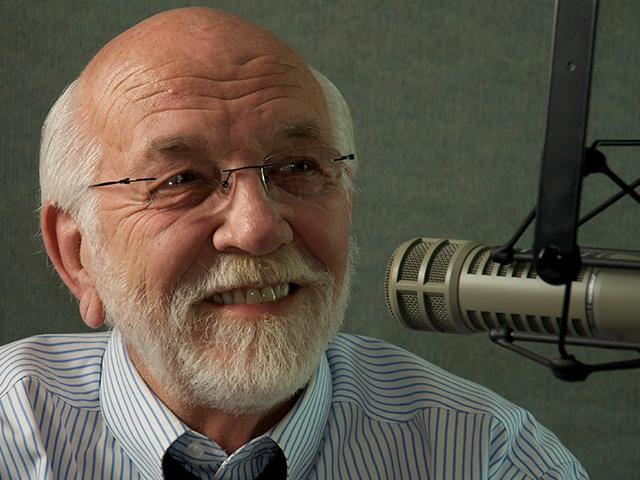
He’s not your mother and he’s not your guru. He’s Steve Brown - a speaker, author, former pastor and seminary professor, and founder of Key Life Network, Inc.
At Key Life, Steve serves as Bible teacher on the radio program Key Life and the host of the talk show Steve Brown, Etc. Prior to Key Life, Steve served as a pastor for more than thirty years and continues speaking extensively.
Steve has also authored numerous books, including How to Talk So People Will Listen, Three Free Sins, Hidden Agendas and his latest release, Talk the Walk: How to Be Right Without Being Insufferable (now available as an audiobook).
Contact Key Life Network with Steve Brown
Key Life Network
P.O. Box 5000
Maitland, FL 32794
In Canada, send requests to:
Key Life Canada
P.O. Box 28060
Waterloo, Ontario N2L 6J8
Telephone Number
1-800-KEY-LIFE


