The Rhythm of Heaven–Rediscovering the Sabbath | The Principles of the Sabbath and the Presence of God
Ministries > Discovering The Jewish Jesus with Rabbi K.A. Schneider

https://www.oneplace.com/ministries/discovering-the-jewish-jesus/
Facebook Twitter Instagram YouTubeIn this episode, Rabbi Schneider reveals how the Sabbath is not just a commandment, but a gift from God built into creation itself. Discover how honoring this divine rhythm can bring rest, freedom from stress, and deeper connection with the Lord.
**** BECOME A MONTHLY PARTNER - https://djj.show/YTAPartner **** DONATE - https://djj.show/YTADonate **** TEACHING NOTES - https://djj.show/am0
Visit our website at DiscoveringTheJewishJesus.com
Rabbi K.A. Schneider: But the Sabbath was made for you and me. What does that mean? The Sabbath was made for you and me. It was made for man. It means that God knew that we would need a day to be refreshed. I've got a message for you that truly can change your life. We're talking today about how to be relieved of stress and anxiety through the practice of the Sabbath. I'm calling this the Principle of the Sabbath and the Presence of God. I've got my producer with me today, Dustin Roberts. Great to be with you here.
Dustin Roberts: Thanks, Rabbi. It's so good to be with you here today, too. I'm really excited about today's message because you told me before we started, this was your first teaching that you began to teach 25 years ago in churches when you would travel into churches.
Rabbi K.A. Schneider: Yes. I was traveling all over the United States teaching this same message everywhere I went, and Gentile pastors—I'm Jewish and Gentile pastors—were being exposed to something that they were not familiar with. They were telling me, "Rabbi, that message was a grand slam home run. It resonated with people and it's very practical as well." We all know that the world is moving quicker than ever before, and it's only going to get quicker, that technology will continue to drive us to be operating at a faster and faster pace. The result is that people are going to become anxious, they're going to be stressed even more so than now. But the Torah, God's word, has a built-in remedy to help us manage the stress and be healthier for practicing this principle of the Sabbath and the presence of God. So Dustin, I'm encouraged to share this with you. I'm going to give you some practical ways that you can implement the Sabbath in your life. It's important to understand the foundation of Shabbat. We're going to be looking at it historically, theologically, and practically. So we're going to begin today by reading from the Torah, from the book of Exodus. We're going to go through examples where you're going to see the Shabbat principle being practiced by Israel. Again, I want to stress that I'm going to give you truth today that you can apply to your life and it will truly make a difference. So we're going to begin by reading from the book of Exodus, chapter 20, verse 8 through 11. We're in the Ten Commandments.
Dustin Roberts: Exodus 20, verse 8. It says, "Remember the Sabbath day, to keep it holy. Six days you shall labor and do all your work, but the seventh day is a Sabbath of the Lord your God. In it you shall not do any work, you or your son or your daughter, your male or your female servant or your cattle or your sojourner who stays with you. For in six days the Lord made the heavens and the earth, the sea and all that is in them, and rested on the seventh day. Therefore the Lord blessed the Sabbath day and he made it holy."
Rabbi K.A. Schneider: This is the first time, Dustin, the word "holy" is used in the Bible. It's in reference to the Shabbat. We find that in the book of Genesis, chapter 2, verse 1 through 3, where the Lord created the world once again in six days, rested on the seventh, and blessed it and called it holy. We all love the word "holy," "Kadosh" in Hebrew, and we think of God as holy, but the first time that word is used in the Bible is in reference to Shabbat. Because the word "holy" means set apart, cut out, unique and different. The seventh day of the week, Shabbat, we say in Hebrew, or the Sabbath in English, was cut out from the rest of the week. It was different. It was separate. Six days we work, but the seventh day is separate and unique. But here's what's really important for us to understand. Shabbat, the Sabbath, is not just about the law. The scripture, Dustin, that you just read, that was part of the Ten Commandments, and most people recognize this as the fourth commandment. However, Shabbat is not first given to us in terms of being part of the Mosaic Law. It's first given to us, beloved ones, in reference to creation. This is really important that we understand this. A lot of people hear about the Sabbath and they think, "I'm not under the law, so it's not really important to me" because as a Christian, we're not under the law. But let's take a step back for a second by reading from the creation story in Genesis chapter 2, verse 1 through 3. Now keep in mind as Dustin reads this, the law was not yet given.
Dustin Roberts: Thus the heavens and the earth were completed, and all their host. By the seventh day God completed his work which he had done, and he rested on the seventh day from all his work which he had done. And then God blessed the seventh day and he sanctified it, because in it he rested from all his work which God had created and made.
Rabbi K.A. Schneider: So get it, it's a creation principle. Shabbat is part of God's divine design that he built into creation for mankind before the law was given. We need to get this because a lot of people, once again, there's such an anti-law mentality amongst most Christians. But we don't understand that the law contains God's self-revelation. There's a difference between being under the law versus taking the spiritual revelation of our creator that he's given us through the law and applying it to our lives as those that are under grace, but realizing that we can't throw out the baby with the bathwater. The law is good, Paul said, for those that use it lawfully. Understanding the principle of the Sabbath as part of the creation helps us as Christians to rethink what application or what pertinence might it have for our life today.
Dustin Roberts: Right. Too often these days in the church, we're not even looking at the law and considering what that means for us today. It's like we've lost those principles. We've kind of adapted Christianity to our Gentile ways, our culture of America or wherever we're from instead of adapting to the roots of our faith.
Rabbi K.A. Schneider: Jesus didn't come to abolish the law, he came to fulfill it. He brings it to its true intent. Jesus said he was Lord of the Sabbath, and I'm going to get into this a little bit later today about how Jesus related to Shabbat and how he anticipated his followers or disciples would relate to Shabbat. But before we get there, let's continue to lay the foundation here. We saw it in Genesis 2. We call Genesis in Hebrew "Beresheet." That's the Hebrew word for Genesis. It means origin or beginnings. But let's build on that to try to understand once again that Shabbat is not first coming from the law, it's coming from creation, from the creator building himself and his pattern for you and I into creation. Remember, the Lord rested on the seventh day. We're created in his image. So let's think this way. The Lord had delivered Israel out of Egypt, and now they've crossed the Red Sea, they're in the wilderness on the way to the promised land. They're not in the promised land yet. They had not yet received the law. They're in the wilderness, and what happens? God is putting manna on the ground six days a week. What happens on the seventh day? There's no manna on the ground, it's a day of rest. So let's read here how this Shabbat principle was before the law.
Dustin Roberts: Okay, this is Exodus 16, verse 20 through 26. But they did not listen to Moses, and some left part of it until morning, and it bred worms and became foul. And Moses was angry with them. They gathered it morning by morning, every man as much as he should eat, but when the sun grew hot, it would melt. Now on the sixth day they gathered twice as much bread, two omers for each one. When all the leaders of the congregation came and told Moses, then he said to them, "This is what the Lord meant: tomorrow is a Sabbath observance, a holy Sabbath to the Lord. Bake what you will bake, and boil what you will boil, and all that is left over put aside to keep it until the morning." So they put it aside until morning as Moses had ordered, and it didn't become foul, nor was there any worm in it. Moses said, "Eat it today, for today is a Sabbath to the Lord, and today you will not find it in the field. Six days you shall gather it, but on the seventh day, the Sabbath, there will be none."
Rabbi K.A. Schneider: So think about this. Israel is in the wilderness, every day they're gathering manna six days a week, but the Lord said on the seventh day there won't be any manna because it's a Shabbat, there's no working, no gathering, no harvesting. But here was the miracle. Every day during the first six days of the week, if they tried to save manna until the next day, the manna would grow foul and infested with worms. They were to eat it and that's it, the next day there would be new manna. If they tried to hoard it, again, it would go foul on them. But supernaturally on the sixth day, they gathered enough for the seventh day, too, so that they wouldn't have to work on Shabbat, and supernaturally the manna didn't go foul on the seventh day. What this tells us is a lot of us think, "I don't have time to have a Shabbat." But what we see is when we honor the Lord by giving him one day a week, he supernaturally puts a blessing on the first six days of the week. He puts a blessing on our lives so that that which would have been impossible the first six days, God somehow makes us still prosper on the seventh day when we're resting. Greetings in Messiah. One thing that perhaps some of you have thought about, but never taken action on, is creating or updating your will or trust. I want to encourage you, go to our website, we have a free tool there. Just hit "wills and estates," and we can help you update or create your will or estate trust gift. Listen, God bless you, I love you. Many of us have honored the Lord while we're living with our finances. Let's carry that over and remember the Lord with our finances when we pass by creating a will and estate so that finances can go to the work of the kingdom.
Voiceover (Dustin Roberts): What a meaningful way to honor God with our finances this year. And if you feel the Lord leading you to create a free will, visit us at DiscoveringTheJewishJesus.com. It's free for you whether you support us or not. Now let's return to Rabbi as he continues his teaching.
Rabbi K.A. Schneider: Let's press on. Shabbat is not just about resting, it was also a sacred sign that God gave to his first covenant people, Israel. So when the Lord entered into covenant relationship with Israel, he gave them a sign, and the sign of the covenant was Shabbat or the Sabbath. What's unique and interesting about that is during the time that the scriptures were written, when two nations, for example, formed an alliance with each other, there would be some type of like insignia, something physical that would designate that they had come into a covenant. But when Israel entered into covenant with their maker, with the Lord, there wasn't a physical symbol that recognized the covenant or that expressed the covenant; it was the invisible symbol rather of Shabbat. But again, it's multidimensional because not only is Shabbat the sign of the covenant between Yahweh, the God of Israel, and his people Israel, it's also, Dustin, a gift that Yeshua spoke of to all mankind. So it's the sign of the covenant between God and Israel, but it's a gift to all of us today. Let's look at what Yeshua said in Mark 2:27 and 28.
Dustin Roberts: Sure. Mark 2:27 and 28 says that Jesus said to them, "The Sabbath was made for man, and not man for the Sabbath. So the Son of Man is Lord even of the Sabbath."
Rabbi K.A. Schneider: The Son of Man is Lord even of the Sabbath. But listen to what Jesus said: man was not made for the Sabbath, but the Sabbath was made for you and me. What does that mean? The Sabbath was made for you and me. It was made for man. It means that God knew that we would need a day to be refreshed. So the Sabbath is actually for us as a gift so that we can live in victory over the world, and I'm going to get into that as we move forward in the broadcast today.
Dustin Roberts: So if we're not honoring the Sabbath, we're actually missing out on something.
Rabbi K.A. Schneider: It's like a car. If you have a car, you get a brand new car and they tell you, "Okay, here's how to take care of your car. You bring it in for an oil change after 5,000 miles, and then at x amount of miles, we bring it in for the change of the spark plugs," etc. You can keep driving that car without bringing it in for the service, but that car is going to go bad on you much quicker if you don't do what the owner's manual told you to do and change the oil, change the spark plug. It's the same thing with Shabbat. The Lord made us. He knows what we need as those that are created in his image. He gave us a pattern to follow. He himself rested on Shabbat. He did it for us to show us: if you want to follow me, this is how to live.
Dustin Roberts: So if we want to be able to be like God and function like he does, we've got to function like he does, we've got to do the Sabbath.
Rabbi K.A. Schneider: If we don't take a day a week to rest unto the Lord, to stop being a human doing—because six days a week we're doing—to instead rest to be refreshed in the Lord, what's going to happen is our body and mind and our psyche is going to keep getting worn out, and we're not going to be able to deal with stress as well. We're not going to be able to deal with anxiety as well. We're not going to be able to deal with the responsibilities of life as well. We're not going to be able to raise our family as well. All these things will suffer if we don't receive the anointing and the gift that God has made available to us at Shabbat, during Shabbat, by participating in it. Now, if someone thinks they're smarter than God—God rested on the seventh day, Jesus said it was a gift, it was made for us—if someone thinks they're smarter than God and wants to say, "I'm not under the law," well, you have that choice, you can do that. But you're going to lose out on an opportunity for spiritual blessing. It's not about being under the law, Dustin, it's about receiving the opportunity to be blessed from the Lord because every time we stop on Shabbat to just present ourselves to the Lord and rest, he re-presents himself to us. There's a blessing we're going to get into it for honoring the Lord on this special day. Yeshua expected his followers, his Jewish followers, to keep Shabbat. Let's look at a few scriptures here that illustrates that Jesus didn't say, "Oh the law's done, the law's gone." No, he actually anticipated that his Jewish followers would continue to celebrate Shabbat. Let's take a look at the book of Luke.
Dustin Roberts: Yes. Luke 23, verse 54 through 56 says, "It was the preparation day, and the Sabbath was about to begin. And now the women who had come with him out of the Galilee"—that's with Jesus—"and saw the tomb and how his body was laid, they returned and prepared spices and perfumes, and on the Sabbath they rested according to the commandment."
Rabbi K.A. Schneider: Very good. So let's clarify something. Yeshua fully expected his Jewish followers to celebrate Shabbat. I mean, there was nothing like, "Oh this is done, this is gone. Hey listen, I was crucified, I shed my blood for you guys, so let's put all that stuff aside." He was never anything like that that he hinted at. You see, what Yeshua was speaking against was not the law, not Shabbat, but legalism. The Pharisees, the religious leaders of Yeshua's day, they built what we call in Judaism a fence around the Torah. Most of you know that the Torah's the first five books of our Bible. So what the Pharisees did is they said, "We need to make sure that no one breaks God's commandment." And their intention was good, but they got sidetracked and they got led away in deception. So by building a fence around the Torah, what the Pharisees did is they added all types of other man-made laws. Yeshua, Jesus, spoke about this in Mark chapter 7 when he said to the Pharisees, "You teach your own traditions as if they're doctrines of God, and they're actually leading people astray." So as it relates to Shabbat, as it relates to the Sabbath, what the Pharisees did is they added all these extra laws. And they said, "These are the things you can't do on the Sabbath." And the way that they came up with these additional laws—again, that God did not give, but man created, originally to build a fence around Shabbat and protect it, but at the end of the day it became a heavy yoke—what they did was, the Pharisees, they said, "Okay, how do we know what we can and can't do on Shabbat?" The Lord told us not to work. We know that. But they asked themselves, "What's work?" And so they said, "We have a clue here because the Lord told us to stop building the tabernacle on Shabbat." So they came up with 39 different categories of work that were involved in the building of the tabernacle—we call it in Hebrew the Mishkan—and one of the categories of work that was involved when they built the tabernacle was ripping and tearing. And so they said, "Okay, there's no ripping and tearing on Shabbat." So today, Orthodox Jews will pre-cut their toilet paper so that they don't break Shabbat by ripping and tearing. And so when Yeshua was speaking against the Pharisees as it related to Shabbat, it wasn't because he was speaking against Shabbat, he was speaking about the legalistic man-made rules that they had built around it.
Dustin Roberts: Oral Law.
Rabbi K.A. Schneider: Exactly. It's called the Oral Law. So we see an example of that when Yeshua was walking through a field with his disciples, and they went down to take some grain and they were accused of harvesting on the Sabbath.
Dustin Roberts: And that's Matthew 12, verses 1 through 2. And that says, "At that time, Jesus went through the grain fields on the Sabbath, and his disciples became hungry and began to pick the heads of grain and eat. But when the Pharisees saw this, they said to him, 'Look, your disciples do what is not lawful to do on the Sabbath.'"
Rabbi K.A. Schneider: The Pharisees see this, they're like, "Look your disciples, they're not doing what's lawful, they're picking grain." What does that mean for us? Well, what it means for us is that as we seek to participate in the Sabbath blessing, to receive the Sabbath anointing, we do it in a way that's led by the Spirit and by the written word of God as those that are being led by the Spirit, not as people that are doing it legalistically. And we don't want to do it legalistically ourselves, and we don't want to put legalism on other people. I'm not under the law, I'm a Jewish believer in Messiah, but again, I don't want to forsake the wisdom and the divine intent of the law so that I can be blessed from its true intent. Around 20 years ago, when I started traveling all over the country teaching on the Jewish roots of the Christian faith, this message that you heard today was the first message that I began to teach. I called it the Principle of the Sabbath and the Presence of God. And everywhere I went, people were so excited to hear truth that they had never heard before. Beloved, it's because of your financial support that I'm able to broadcast truths that people are not hearing other places. The Bible tells us that the church should support those men and women that go out for the sake of the truth. If you believe in me, if you believe that this ministry is important, if you believe that the word that you heard today is important for others to hear and that God wants to get it out, I want to ask you: would you lift your heart to the Lord about making a financial offering to the Lord today through Discovering The Jewish Jesus? It's only because of you, beloved, that people are being saved and brought closer to the Lord through this ministry.
Voiceover (Dustin Roberts): To give generously online today, visit DiscoveringTheJewishJesus.com or support Discovering The Jewish Jesus by calling us at 800-777-7835. And now I'd like to remind you about our self-delivery teaching bundle. It's an engaging resource. It includes Rabbi Schneider's step-by-step PDF guide that explains how to recognize spiritual footholds and also close open doors to the enemy through scripture. You'll also receive an MP3 audio file with prayers that you can model that go along with the teaching. So claim your free delivery bundle right now. Just go to myfreegift.com/freedom. That's myfreegift.com/freedom. And now here's Rabbi to speak God's sacred blessing over us as we wrap up our discussion on the Sabbath and the presence of God. As Rabbi speaks and sings the Aaronic Blessing over us, I want you to take a moment and receive it personally. These aren't just closing words. They come from scripture where God told his people how his name would be placed upon them when the priest prayed this blessing over the people. So right now, sit back and be reminded that the Lord sees you, he keeps you, and his desire is to cover your life with his peace today and this week. Rabbi.
Rabbi K.A. Schneider: Blessings trump curses. And in the book of Numbers chapter 6, we find the Aaronic blessing that God commanded Moses' brother Aaron, the High Priest, to speak over the children of Israel. There's power in blessing, beloved ones, so take part in receiving Father's blessing upon your life today. The Lord bless you and keep you. The Lord make his face shine on you and be gracious to you. The Lord lift you up with his countenance and the Lord give you, beloved one, his peace. And now in Hebrew. Yevarechecha Adonai Veyishmerecha. Yaer Adonai panav eleicha vichuneka. Yissa Adonai panav eleicha veyasem lecha shalom. God bless you and shalom.
Outro Voiceover: This program is produced and sponsored by Discovering The Jewish Jesus. So join us again next time when Rabbi Schneider reveals why learning the Old Testament isn't about legalism, but alignment with the Father's heart. That's coming up Wednesday on Discovering The Jewish Jesus.
Related Episodes
Not About Legalism but Alignment | The Principles of the Sabbath and the Presence of God
Wednesday, August 12
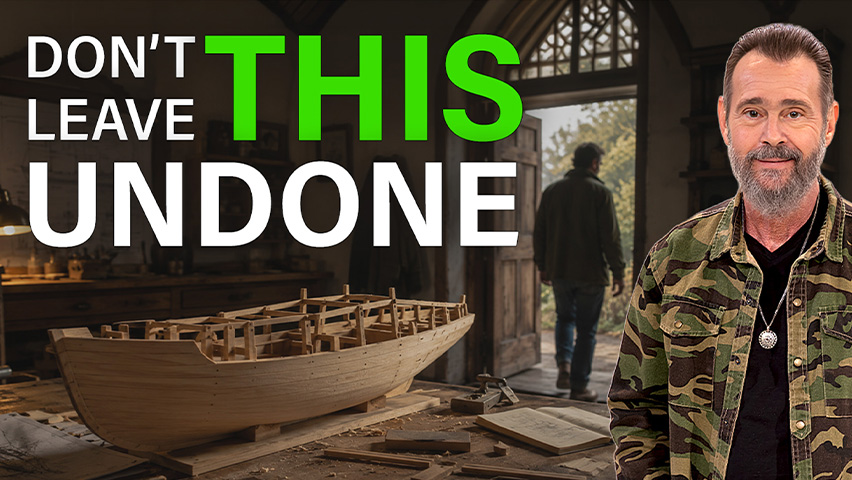
Your Lasting Legacy
Monday, August 10
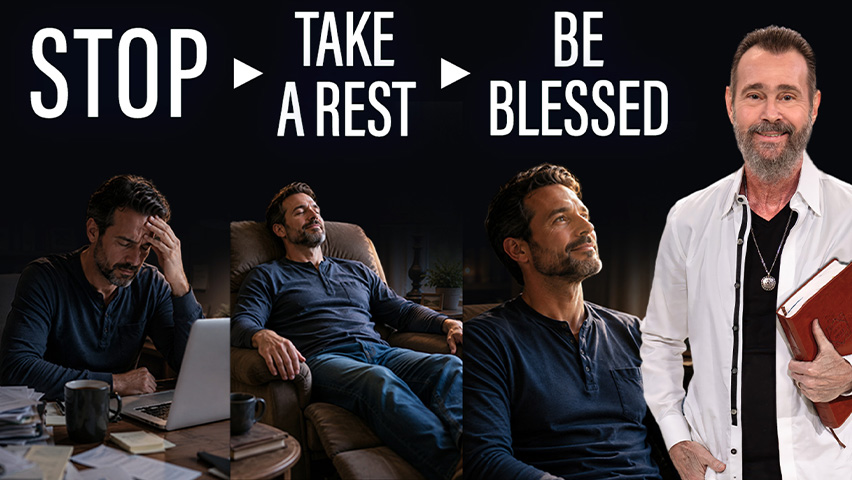
Stop Living on Autopilot
Saturday, August 8
Related Videos

About Discovering The Jewish Jesus
Discovering The Jewish Jesus with Rabbi Schneider imparts revelation of Jesus' Jewish heritage and His fulfillment of messianic prophecy. Questions of how the Old and New Testaments tie together, and how Yeshua completes the unfolding plan of God, are answered with exceptional clarity. Through understanding the Old Testament and its prophetic nature (with Yeshua as its fulfillment) your faith is strengthened, increased relationship and intimacy with the LORD is discovered, and an end-times vision of life is crystallized. This is an end-times ministry, strengthening the church and calling her to be a readied bride for the return of the Bridegroom, Yeshua Ha-Mashiach (Jesus The Messiah).
About Rabbi K.A. Schneider
Messianic Rabbi K.A. Schneider, a Jewish believer in Jesus and end-times messenger of the LORD, delivers the Word of the LORD with true passion of the Holy Spirit. At the age of 20 years old, the LORD appeared to him, supernaturally, as Jesus, the Messiah. He has since pastored, traveled as an evangelist, and more recently, served as rabbi of a messianic synagogue.
Rabbi K.A. Schneider imparts revelation of Jesus’ Jewish heritage and His fulfillment of messianic prophecy. Questions of how the Old and New Testaments tie together, and how Yeshua completes the unfolding plan of The Almighty Yahweh, are answered with exceptional clarity.
Central to the LORD’s plan is Israel and the Jewish people. Romans 11:11 explains that the Gentile believer has been chosen by God to bring the witness of the LORD to the Jewish people. As this message of Yeshua is brought back to, and received by, the Jewish people, they will say, “Baruch Haba B’Shem Adonai” – “Blessed is He who comes in the Name of the LORD!” and in so doing, usher in Yeshua’s return (Matthew 23:39).
Through understanding the Old Testament and its prophetic nature, with Yeshua as its fulfillment, the viewer’s faith is strengthened, increased relationship and intimacy with the LORD is discovered, and an end-times vision of life is crystallized. “Discovering The Jewish Jesus” is an end-times ministry, strengthening the church and calling her to be a readied bride for the return of the Bridegroom, Yeshua Ha Mashiach (Jesus The Messiah).
Contact Discovering The Jewish Jesus with Rabbi K.A. Schneider
Mailing Address
Discovering The Jewish Jesus
P.O. Box 777
Blissfield, MI 49228
Telephone
1-800-777-7835


