Following the journey of Sarawak Pepper from a small farm in Julau, Malaysia, to the finished peppercorn
Lifestyle

Audio By Carbonatix
2:00 PM on Wednesday, October 21
By Azam Ismail Bakri for Malaysian Pepper Board, Stacker

Black pepper and white pepper can begin on the same vine.
By the time they reach a kitchen, their appearance, aroma and culinary uses may seem to place them in separate categories. Yet the distinction begins much earlier, with the maturity of the berries at harvest and how they are handled after picking.
As the Malaysian Pepper Board explains below, that transformation is part of everyday knowledge in Sarawak, the heart of Malaysia’s pepper-growing industry. In pepper-growing communities across the state, decisions made at and after harvest can determine whether berries eventually become dark, wrinkled black peppercorns or the pale seeds recognized as white pepper.
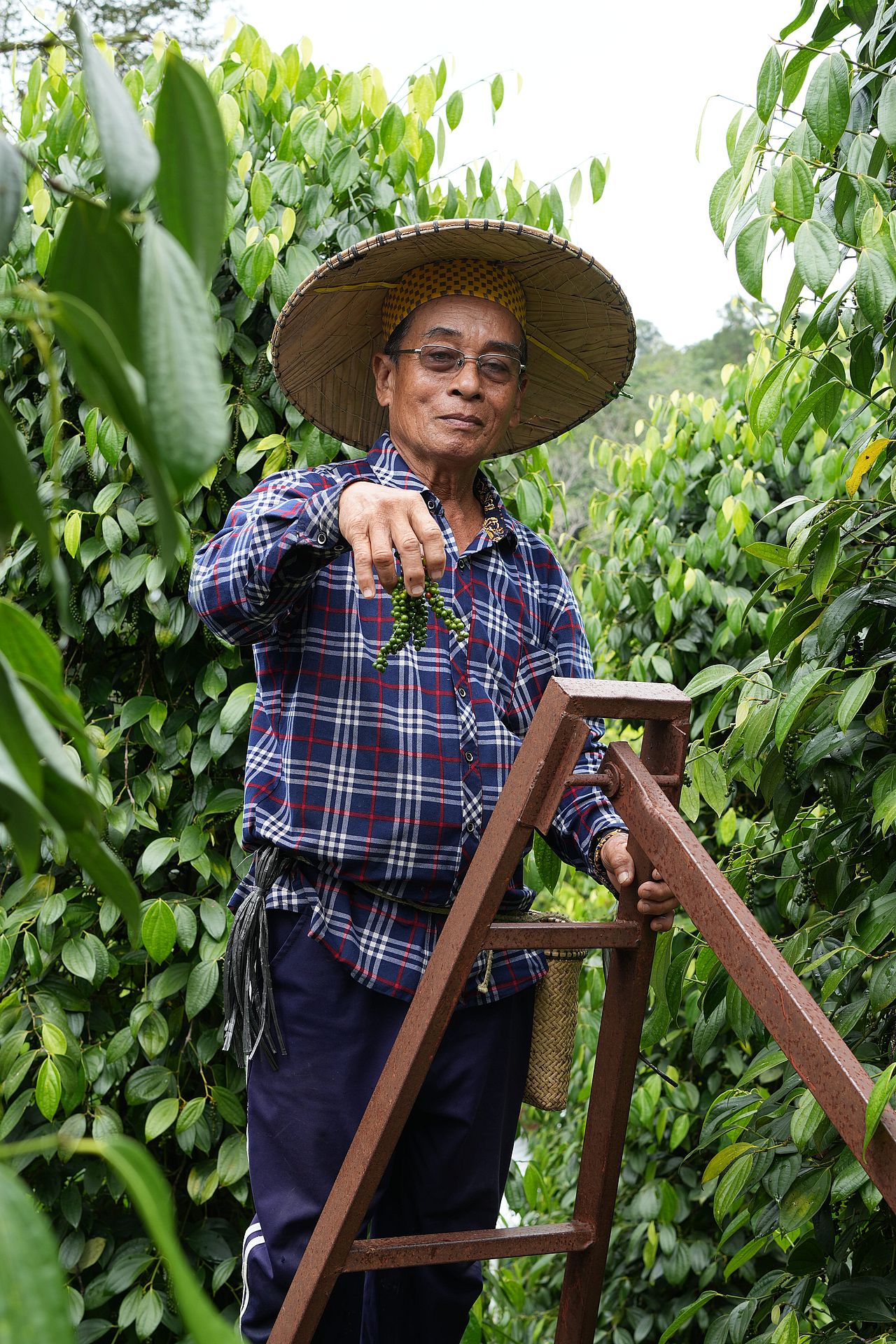
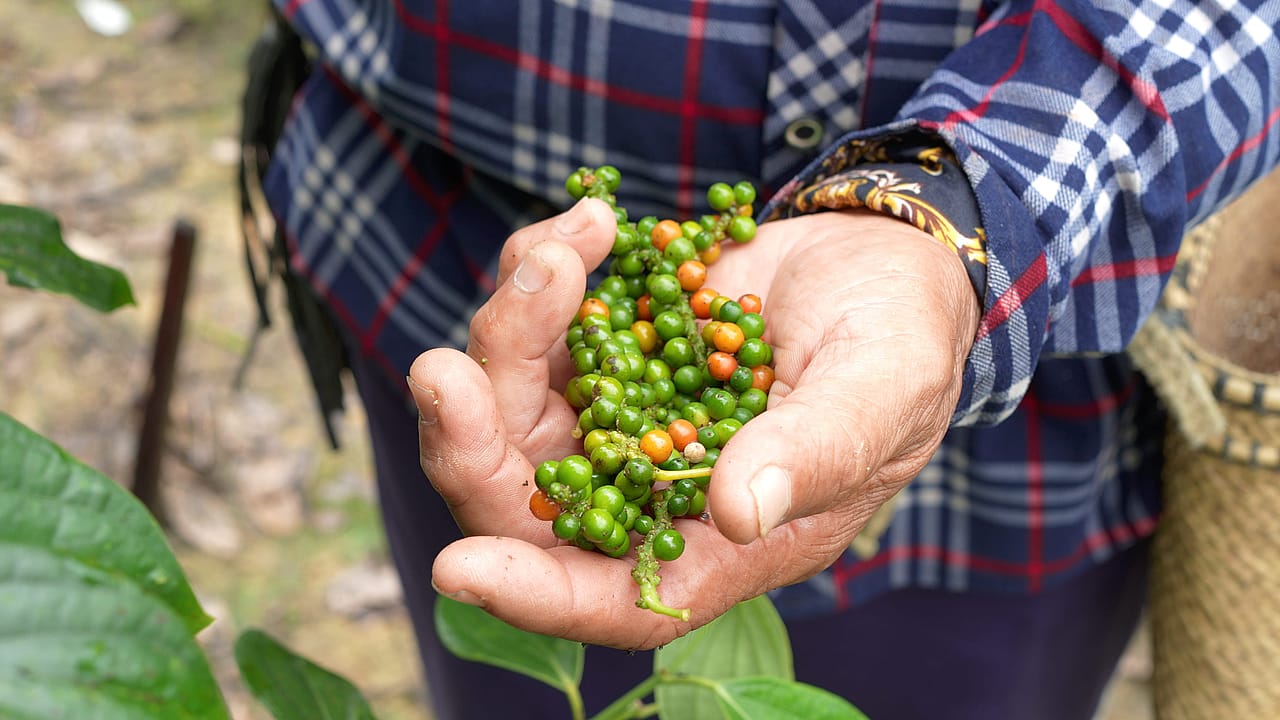
In Julau, one of those growers is 71-year-old Segan Anak Jubin (pictured above).
His pepper garden rises along a green hillside near the longhouse community where his family lives. Rows of vines climb their supports, and Segan still moves through them, checking leaves, developing pepper spikes and the condition of individual plants.
There is nothing hurried about the work.
During a recent morning in the garden, rain interrupted activity and sent those in the field toward a simple shelter at the edge of the plot. The pause was unremarkable to Segan. Growers wait for the rain to ease, he explained, and return to the vines when conditions allow.
The weather is one variable. Harvest timing is another.
And once the berries are picked, the paths of black and white pepper begin to separate.
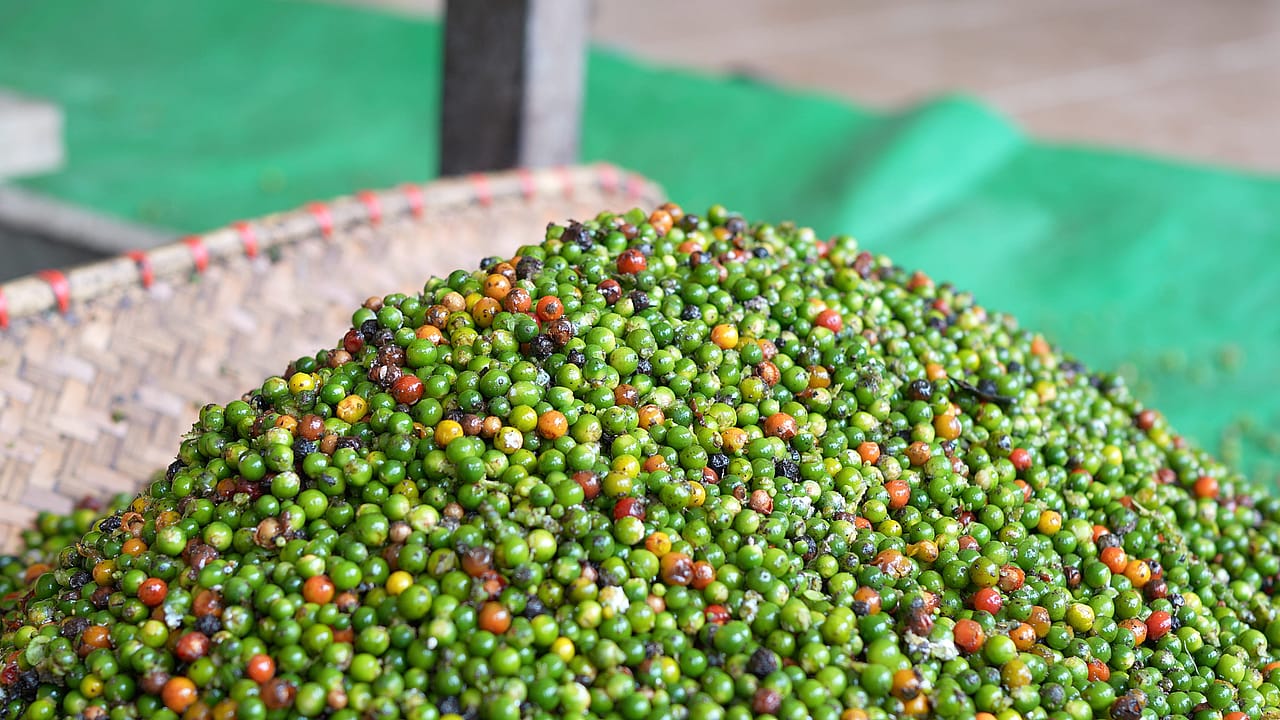
The same crop, two different paths
What ultimately distinguishes black from white Sarawak Pepper is the maturity of the berries at harvest and the way they are handled afterward.
Black pepper is dried with the outer portion of the berry intact. As moisture is lost, the surface darkens and wrinkles, producing the familiar black peppercorn.
White pepper follows a different route.
An official Malaysian government description of Sarawak creamy white pepper explains that fully matured berries are carefully selected and soaked in tanks supplied with running water, or in clean running streams, so the softened outer layer — known as the pericarp — can be removed.
Once the outer layer is removed, the remaining peppercorn is washed and dried, producing the pale appearance associated with white pepper.
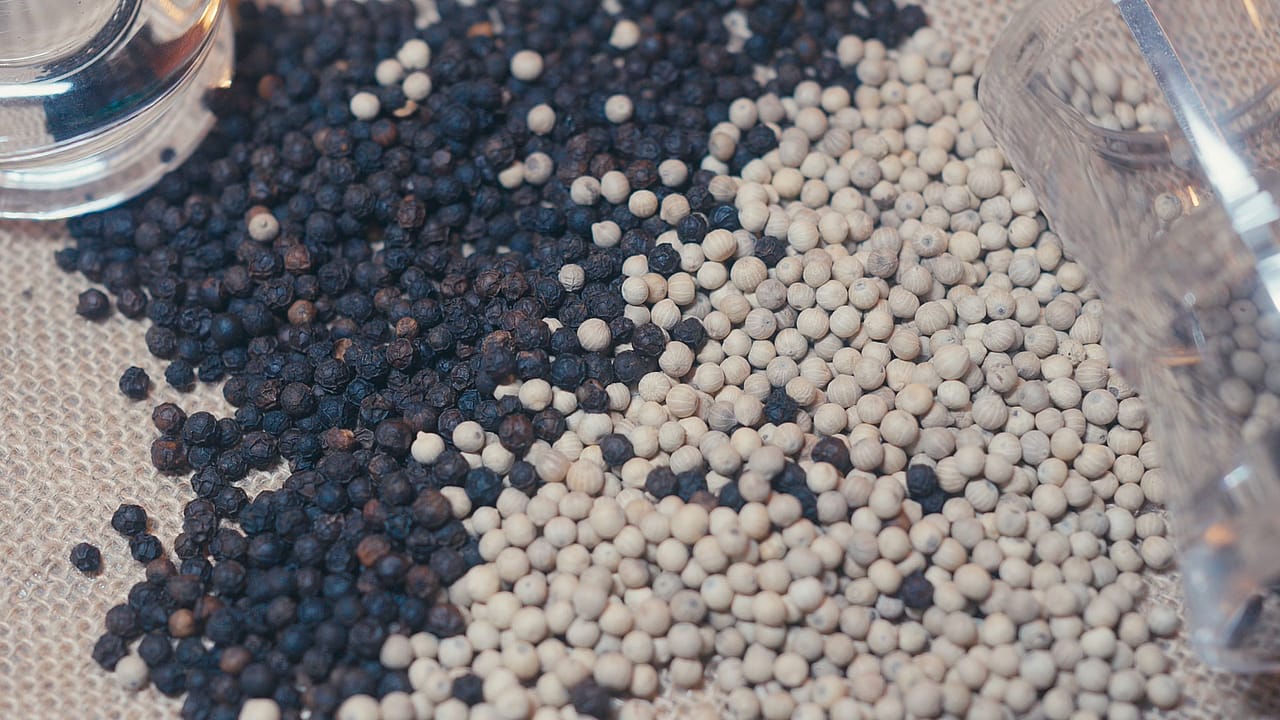
The distinction sounds simple when black and white pepper sit side-by-side on a kitchen shelf. On the farm, however, it begins with choices made much earlier: when berries are harvested, how they are handled, the water used during processing and how the peppercorns are dried.
Commercial pepper can also be assessed according to physical characteristics such as moisture content, cleanliness and the proportion of lighter berries. These measurements help describe differences in the finished product without changing the fundamental relationship between black and white pepper. Local practices can vary according to place and community tradition.
In Segan’s community, fully mature berries intended for white pepper are soaked for about two weeks in clean spring water flowing through the surrounding hills before the softened outer layer is removed and the peppercorns are washed and sun-dried.
The two-week period reflects local practice in Segan’s community and is not presented as a standard processing period for all Sarawak Pepper.
That distinction matters because it separates a local, first-hand account from the broader documented method.
A smallholder crop with deep roots
Pepper cultivation in Sarawak remains closely associated with smallholders rather than large plantations.
Malaysia’s pepper industry supports more than 38,000 registered pepper growers nationwide, with commercial pepper cultivation centered in Sarawak.
Those numbers describe the scale of an industry. They say less about how agricultural knowledge survives inside individual families.
At Segan’s home, the story of pepper farming sits alongside another story: how one family has remained connected to the land while the next generation has moved into higher education and opportunities beyond the farm.
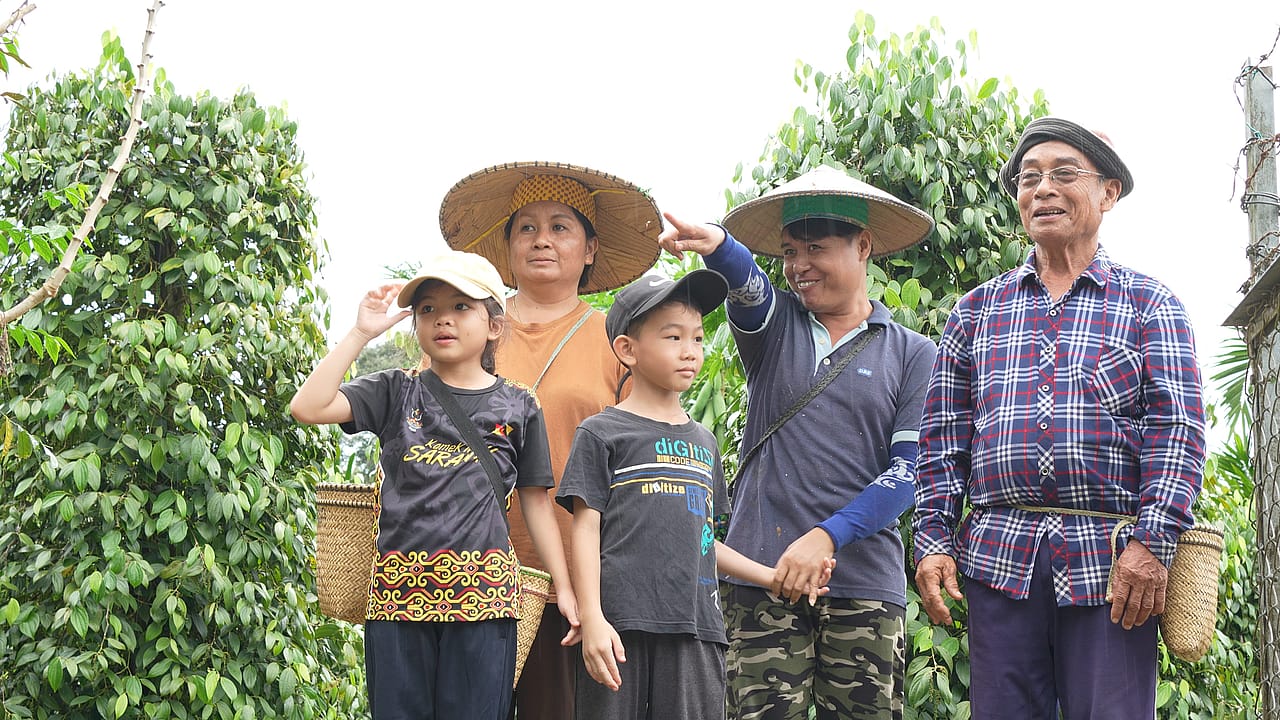
His children and grandchildren grew up familiar with the garden and the rhythms of pepper cultivation, but their futures have not been limited to agriculture. According to Segan, all of his grandchildren have pursued higher education. Some have studied at universities in Sarawak, others in Kuala Lumpur, while one is attending Sultan Idris Education University, or UPSI, in Perak.
Their experience reflects a family that has not left its farming roots behind but has built on them, carrying forward an understanding of pepper cultivation while also pursuing education and careers beyond the village.
That balance is visible inside Segan’s longhouse home.
Family photographs include university graduation portraits alongside everyday family memories. Among them is a photograph of Segan receiving a state honor from the governor of Sarawak.
None is presented as the room’s centerpiece. Together, they form a record of a family whose roots remain in the pepper-growing community while its experiences increasingly extend beyond.
That is an important distinction when looking at agriculture in contemporary Sarawak.
A longhouse community may be physically distant from Malaysia’s largest cities, but distance does not necessarily mean isolation. Education, communications and mobility have widened the possibilities available to younger generations, even where agriculture remains part of family identity.
The pepper garden, in other words, can remain part of where a family comes from without defining the limits of where its members may go.
Why origin matters
For Sarawak pepper, geography is more than background.
Sarawak pepper has been registered as a geographical indication, or GI, since 2003, formally connecting the protected designation with pepper originating from Sarawak.
The GI provides a formal connection between the product name and its geographical origin.
But the relationship between pepper and place is also visible at a much smaller scale.
In Julau, it can be seen in vines climbing the hillside.
It can be found in the clean spring water flowing through the surrounding hills and used locally in traditional white-pepper preparation.
And it survives through knowledge accumulated over seasons: knowing when berries have reached the right maturity, recognizing when weather requires patience and understanding how different post-harvest choices can lead the same crop toward different finished products.
The official statistics place Segan among tens of thousands of pepper growers in Sarawak.
His own practices represent one grower, one family and one community. They give a human scale to a process that most consumers encounter only at its final stage.
By the time Sarawak Pepper reaches a kitchen thousands of miles away, little may be visible of the hillside where it began, the water used in its preparation or the knowledge behind its cultivation.
In Julau, however, those connections remain part of everyday life. For Segan, the journey begins again each time he returns to his pepper garden.
This story was produced by the Malaysian Pepper Board and reviewed and distributed by Stacker.


