Embracing the Colors of Change in Your Spiritual Life - iBelieve Truth: A Devotional for Women - October 1, 2026
iBelieve Truth: A Devotional for Women


Audio By Carbonatix
By Aubrey Sampson, Crosswalk.com

"And we all, who with unveiled faces contemplate the Lord's glory, are being transformed into his image with ever-increasing glory, which comes from the Lord, who is the Spirit." - 2 Corinthians 3:18
I have a complicated relationship with change. I can preach about it with genuine conviction — about how God works in seasons, how transformation is the core of the gospel, how the Spirit is always moving. And then a season shifts, something I loved ends, or something I didn't ask for begins, and I find myself grieving what was instead of leaning into what is.
Change in our spiritual lives can feel disorienting - even if the change is good. This can happen when a spiritual practice that usually helps you connect with Jesus starts to feel dry, or a community that seemed like home suddenly starts asking you to turn into someone you have outgrown, or when God seems to be leading you somewhere that you can’t fully name yet. These are not signs of spiritual failure. Often, they are signs of spiritual growth — of a God who loves us too much to let us stay exactly where we are, and who uses every season, even the uncomfortable ones, to form us into something more like Christ.
Second Corinthians 3:18 gives us one of Scripture's most beautiful images of spiritual transformation. Paul describes believers as people with unveiled faces — no longer hidden, no longer separated from the presence of God by the barrier that sin created — contemplating the glory of the Lord. And as we look, we are changed. The Greek word translated "transformed" here — metamorphoō — is the same root as our word metamorphosis. It is not a minor adjustment. It is a fundamental change in form. And it is progressive: ever-increasing glory. Transformation doesn't happen all at once, and it doesn't plateau. It is ongoing, always moving toward something more fully reflecting Christ.
Crucially, Paul says this transformation "comes from the Lord, who is the Spirit." We are not generating it. We are not managing it. We are participating in something the Spirit is doing in us. Our role is to keep looking — to stay in the presence of the One whose glory is doing the transforming work. Change, in Christ, always moves toward more glory, not less. With that in mind, here are some handholds for seasons of change:
Name the change you're in the middle of.
Spiritual growth is easier to see in hindsight than in the middle of it. Try putting language to your current season — what is ending, what is beginning, what feels ambiguous? Naming it helps us hold it more honestly before God.
Resist the urge to rank your spiritual seasons.
We often treat seasons of spiritual dryness as lesser than seasons of spiritual vibrancy. But Scripture doesn't support that hierarchy. Desert seasons, wilderness seasons, seasons of grief and confusion — these have produced some of the most durable faith in the people we most admire.
Ask God what he is forming in you through this particular change.
Not what you should do about it, but what he is doing in it. That is a different question, and it tends to open different things.
Stay with the practices that keep you looking toward God.
Scripture, prayer, community, worship — even when they feel dry. Looking to God is the thing. The transformation follows.
What color is this season of your spiritual life, and what might God be growing in it?
Let's pray ...
Lord, I want to embrace what you are doing in me — but I confess that change is often easier to celebrate in theory than to welcome in practice. There are parts of this season I have resisted, things I have grieved longer than I needed to, places where I have held on to what was because I couldn't yet trust what is coming.
Forgive me for the times I've treated spiritual growth as something I produce rather than something you initiate. Help me to keep my face turned toward you — unveiled, expectant, willing — and to trust that the transformation you are doing is moving me toward more of your image, not less.
Help me be a woman who welcomes your refining work, even when it is uncomfortable. Teach me to hold each season — the bright ones and the dry ones, the certain ones and the disorienting ones — as a gift from a God who is always, always moving me toward glory.
Do your forming work in me. I am yours.
Amen.
What truth from today’s devotional is God using to encourage your heart? Share your reflection and join our conversation in the iBelieve Truth Devotional Forum.
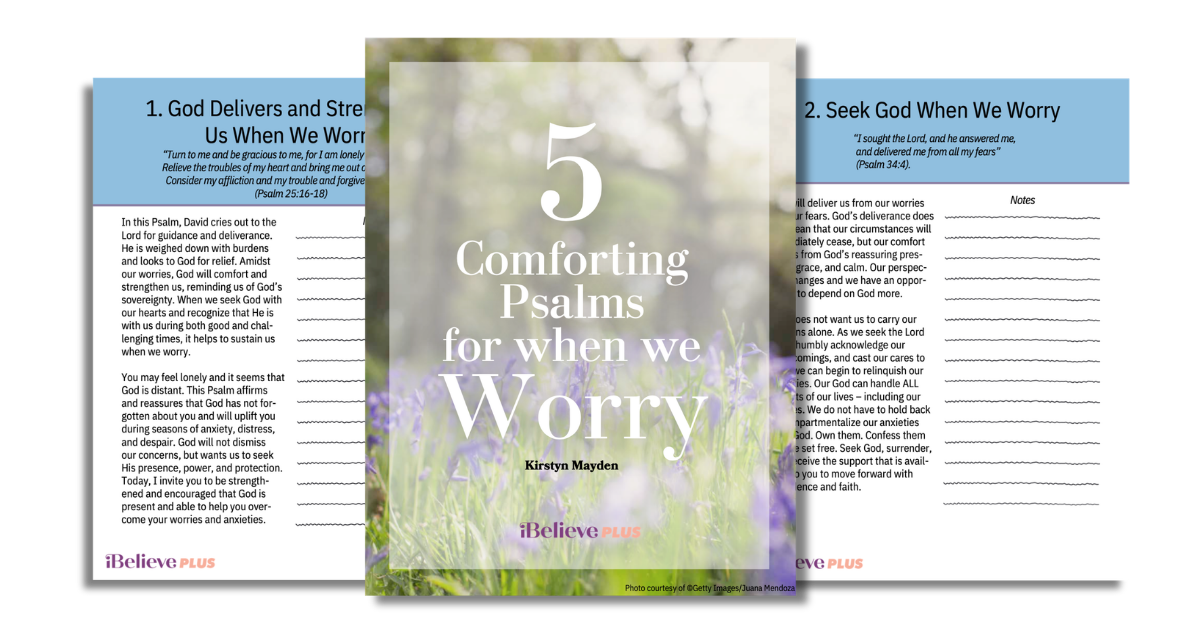
Feel like digging a little deeper? Here is a wonderful resource to meet you right where you are. 5 Comforting Psalms for When We Worry: A Guided Reflection Journal
Photo Credit:© iStofk/Getty Images Plus/Drazen Zigic
For more on this topic, check out my book Known: How Believing Who God Says You Are Changes Everything.
 Aubrey Sampson is a pastor, author, speaker, and cohost of the podcast, Nothing is Wasted. She is the author of Big Feeling Days, The Louder Song, Overcomer, and her newest release, Known. Find and follow her @aubsamp on Instagram. Go to aubreysampson.com for more.
Related Resource: The Blind Spots Hurting Your Relationships
In this episode of I Wish You Could Hear This, Shaunti and Jeff Feldhahn sit down with licensed professional counselor and bestselling author Debra Fileta for an honest and insightful conversation about the relationship blind spots many of us don’t realize we have. Together, they explore how emotional patterns, past wounds, and unrecognized habits can quietly shape the way we connect with others.
Debra shares practical wisdom on how to grow in self-awareness, strengthen communication, and take ownership of the ways we impact the people we love. Whether you’re dating, married, leading others, or simply wanting healthier relationships, this episode offers hope-filled tools to help you break unhealthy cycles and build deeper connection.
If you’ve ever wondered why relationships can feel harder than they should—or how to become a healthier version of yourself—this conversation is for you. Like what you hear? Be sure to follow I Wish You Could Hear This on Apple or Spotify so you never miss an episode!
Like what you hear? Be sure to follow I Wish You Could Hear This on Apple or Spotify so you never miss an episode!


